

Yes, generative engine optimization (GEO) is worth it in 2026 if buyers in your category ask ChatGPT, Gemini, Perplexity, Claude, Copilot or Google AI Overviews for recommendations. It is not worth a large budget if you cannot measure whether your brand is named, cited or recommended in those answers. The cost of getting it wrong is lopsided: a small tracking set is cheap, and being absent from the answer a buyer reads is not.
- Is generative engine optimization worth it in 2026? Yes, when your buyers use AI assistants to shortlist vendors.
- Start with measurement: track whether AI answers mention, cite or recommend your brand before spending on content.
- Skip a big GEO budget if you cannot define a prompt set and a baseline.
- GEO adds to SEO. It does not replace it, because AI answers still draw on pages that rank and get cited.
Is generative engine optimization worth it in 2026?
GEO is worth it in 2026 when three conditions hold. Miss all three and you can wait.
- Your buyers ask AI tools for recommendations. If prompts like "best [your category] for [use case]" produce named brands, you are competing for a slot you cannot see in rank tracking.
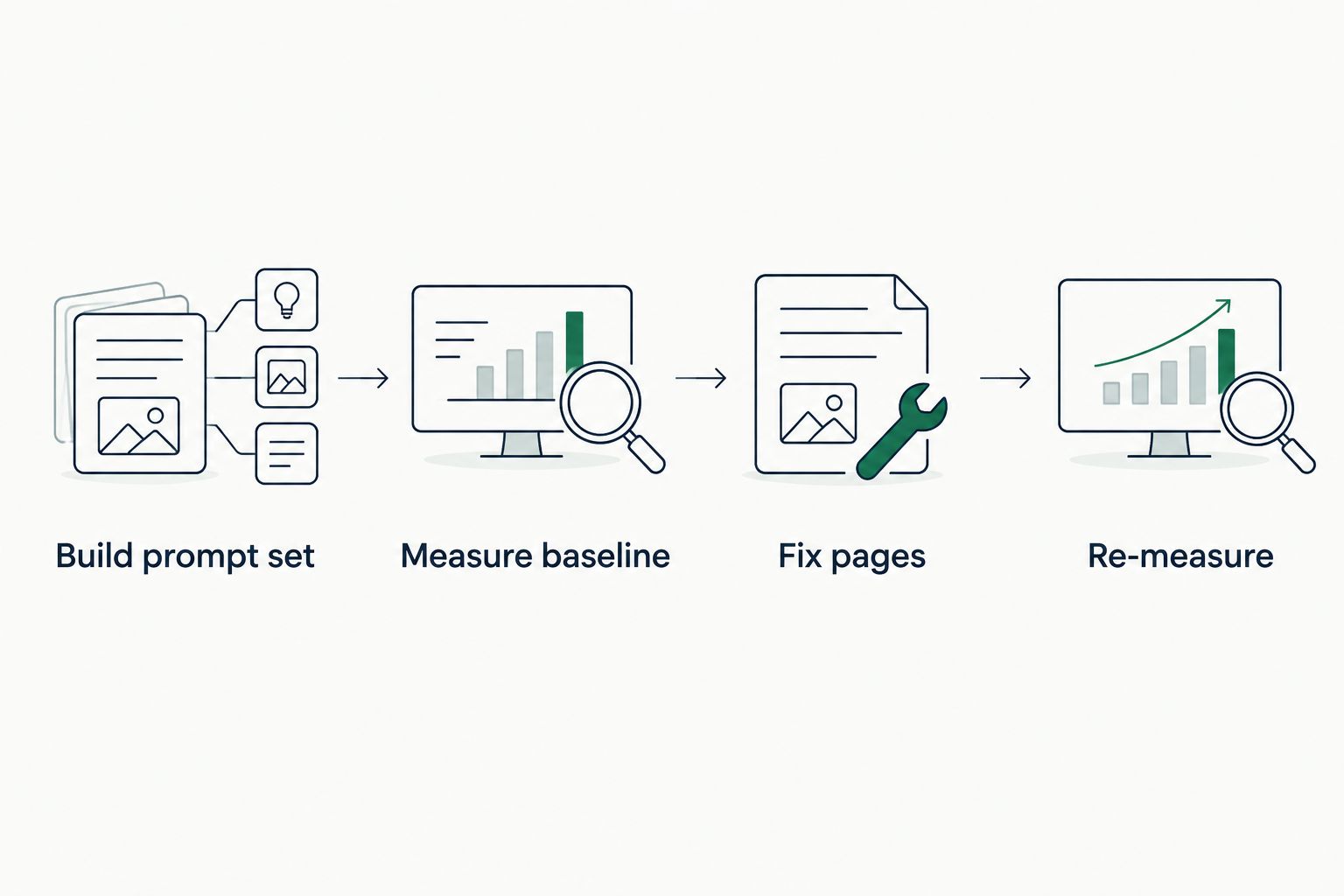
- You can define a prompt set. A fixed list of buyer questions, run on a schedule, is the baseline everything else depends on. See how to build a prompt library for AI visibility tracking.
- You have content or off-site sources you can change. GEO is fixes, not reports. If nobody can edit pages or earn third-party coverage, measurement alone changes nothing.
Verdict: worth it as a measured, staged programme. Skip it as a blind, large-budget bet.
Why generative engine optimization pays off for some brands and not others
AI answers compress a shortlist into a few names. A brand that is not in the answer is not in the consideration set, and no analytics tool shows you that loss.
That is the core difference from traditional search. A page can rank and still never be named. A citation that never produced a click is invisible in GA4, Similarweb and Semrush, which measure referral traffic, not presence in the answer.
GEO pays off fastest where:
- Purchases involve research and comparison (software, services, regulated categories).
- Competitors are already named in AI answers and you are not.
- Your site has substantive pages that answer buyer questions directly.
It pays off slowest where buyers rarely ask an AI assistant anything about your category. Test that before you invest. How to test if a prompt triggers your brand in AI answers shows the method.
What GEO actually gets you: mention, citation, recommendation
Three outcomes get lumped together. They are not the same, and only one is the goal.
| Outcome | What it means | Value |
|---|---|---|
| Mention | The brand name appears in the answer | Awareness, weak intent |
| Citation | Your page is listed as a source | Credibility, possible click |
| Recommendation | The answer names you as the pick | Closest to a sale |
A programme that only counts mentions overstates its results. Track all three per prompt and per platform. Weight prompts by buyer intent so a recommendation on a purchase-ready question counts more than a mention on a broad one: how to weight prompts by buyer intent in AI tracking.
How GEO compares with SEO in 2026
GEO does not replace SEO. It changes what you measure and adds work on top.
| SEO | GEO | |
|---|---|---|
| Goal | Rank a page | Be named, cited or recommended in an answer |
| Core metric | Position, clicks | Citation, mention and recommendation rate, share of voice |
| Unit of work | Page and keyword | Prompt and source |
| Blind spot | Zero-click answers | Traffic attribution |
Best for: SEO teams adding GEO as a second layer rather than a separate budget line. The overlap is large. Clear, well-structured pages that answer the question directly help both. The practical differences are covered in how to approach generative engine optimisation for your brand.
Why the return on GEO varies
Results depend on factors you can check before you commit:
- Prompt coverage. The number of buyer questions where you could realistically appear.
- Current baseline. Where you stand against competitors on the same prompts.
- Page quality. Whether your pages answer questions directly and carry structured markup.
- Off-site sources. Whether third-party sites that AI models draw on mention you.
- Platform mix. ChatGPT, Gemini, Perplexity, Claude, Copilot and Google AI Overviews can name different brands for the same question.
- Technical access. Whether AI crawlers can read your site at all. Check this first with a technical readiness audit for AI crawlers.
How much does GEO cost, and when does it pay back?
The cost depends on whether you buy software, services or both, and the figures vary by vendor. Check current pricing rather than relying on a number here. For ranges and what drives them, read how much AI visibility tracking software costs. If you are weighing an agency, how to evaluate generative engine optimization services lists what to ask.
Payback is the harder question. Tie it to something you already count: pipeline from branded and unbranded search, demo requests, or referral traffic from AI platforms. How to calculate ROI on AI visibility tracking software walks through the arithmetic.
Is GEO worth it for a small team?
Yes, if you keep the scope tight. A small team should run one prompt set, one monthly review and a short fix list. Skip the dashboards you will not open.
The cheapest first move is a baseline: 20 to 50 buyer questions you choose, run across the major platforms, scored for mention, citation and recommendation. Repeat monthly. How to run a monthly AI visibility benchmarking review gives the routine.
Does GEO work without tracking tools?
No. Without tracking you cannot tell whether a change helped. AI answers vary between runs and platforms, so a single manual check proves nothing. Koalr is AI visibility and answer engine optimization software built for this: it tracks how a brand appears in answers from ChatGPT, Gemini, Perplexity, Claude, Copilot and Google AI Overviews. If you are comparing options, start with how to compare AI visibility tools before buying one.
Does GEO replace SEO in 2026?
No. Keep SEO running. GEO is an additional layer on the same content, and the two share most of their groundwork.
FAQ
Is generative engine optimization worth it in 2026?
Yes, if your buyers ask AI assistants for recommendations in your category. Start with measurement, then fix the pages and sources that decide who gets named.
Is GEO better than SEO?
No. They solve different problems. SEO earns rankings and clicks; GEO earns mentions, citations and recommendations inside AI answers. Most teams run both.
How long does GEO take to work?
It depends on your baseline, your content and how often the platforms refresh what they draw on. Re-measure monthly and judge by trend, not a single run.
What should I measure first in GEO?
Measure whether your brand is mentioned, cited or recommended across a fixed set of buyer prompts. That baseline shows where you trail competitors.
Can a small business benefit from generative engine optimization?
Yes, with a narrow prompt set and a monthly review. Small teams gain most by fixing a few high-intent pages rather than chasing every prompt.
Is GEO worth it if I get little AI referral traffic?
Possibly. Citations that never produce a click do not appear in analytics, so low referral traffic does not mean low visibility. Track both separately.
One last thing
Before you pay for anything, run your five most important buyer questions through ChatGPT, Gemini and Perplexity and write down which brands come back. If competitors appear and you do not, that gap is your business case. If nobody is named, the category is still open and an early baseline is cheap. Either way, 2026 is a better year to start than 2027.


