
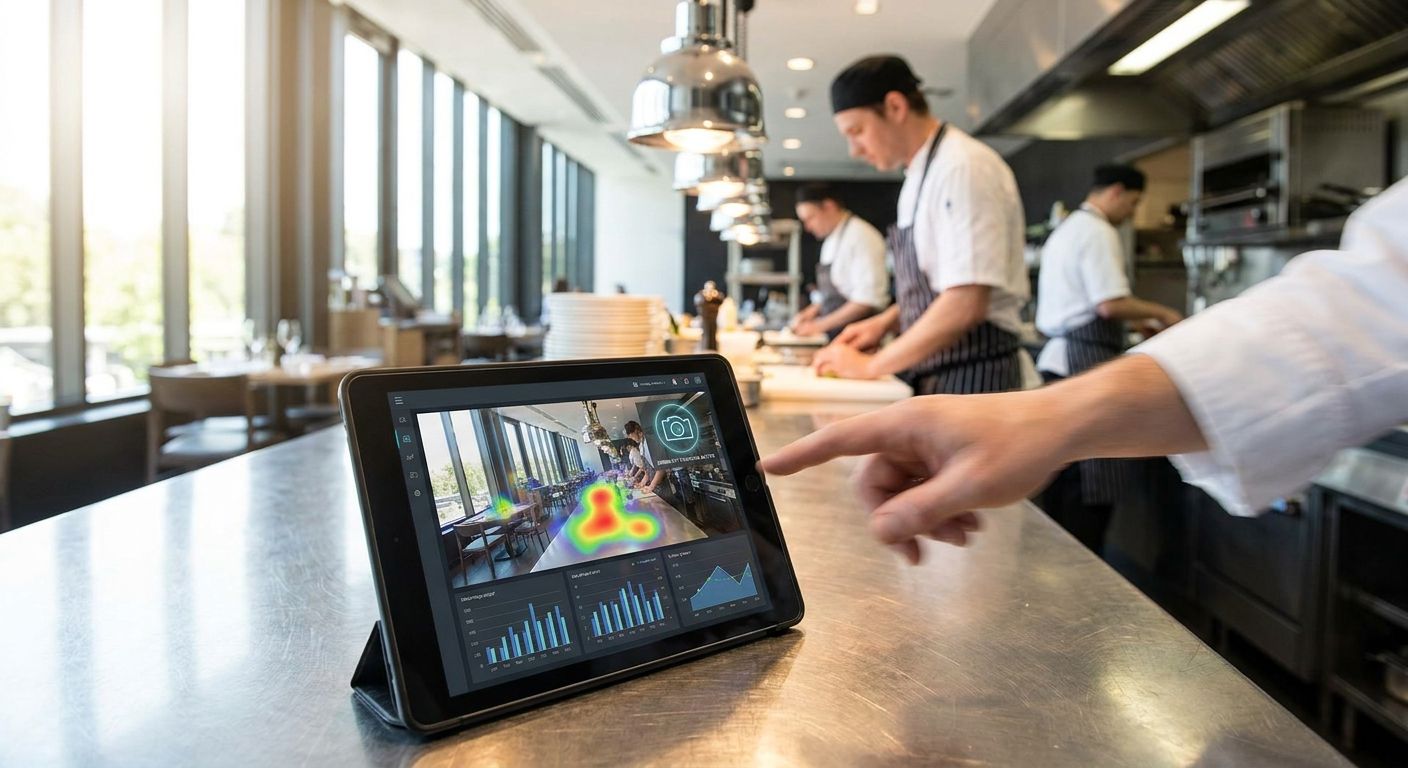
Restaurant brands lose customers to AI answers before those customers ever open Google. When someone asks ChatGPT or Gemini "best brunch spot near me" or "family-friendly restaurants in Manchester," the names that get cited come from a mix of review data, menu content, and local signals your marketing team probably isn't tracking yet.
- AI visibility tracking for restaurants means monitoring citations across ChatGPT, Gemini, Perplexity, Claude, Copilot and Google AI Overviews, not just Google rankings.
- Koalr fits multi-location and franchise restaurant brands best because it separates location-level citations from brand-level ones — Buy for chains over 5 locations.
- Single-location independents should Consider a lighter setup first; the ROI case gets stronger once you're managing more than one storefront.
- Skip any tool that only reports mentions and can't tell you whether the AI answer actually recommended you or just named you.
Why this matters
Restaurant discovery has always been local and comparative — "best X near me" is the oldest query pattern in the category. AI answer engines have absorbed that pattern and now answer it directly, often skipping the click to your website entirely.
If a diner asks Perplexity for the top three Italian restaurants in a neighborhood and your brand isn't named, you lost the booking without ever seeing it in your analytics. That's the gap AI visibility tracking for restaurants exists to close in 2026: seeing what the AI said, not just what traffic came from.
Who this is for
This guide is for marketing leads and multi-location operators at restaurant groups, hospitality brands, and franchise networks who need to know whether AI engines name their concepts, chefs, and locations when diners ask for recommendations. If you run a single independent restaurant with one location and a tight budget, some of this still applies, but the case for a dedicated tracking layer gets stronger the moment you add a second address or a franchise agreement.
Start with Koalr if you want a baseline read on how your brand currently shows up across ChatGPT, Gemini, Claude, Perplexity, Copilot, and Google AI Overviews before deciding how deep to go.
What to look for in AI visibility tracking for restaurants
Location-level query coverage, not just brand-level
A restaurant chain with 15 locations across three cities needs to know if the AI names the Leeds branch when someone asks about Leeds, separately from whether it names the brand nationally. Generic brand-tracking tools built for SaaS or e-commerce collapse this into one score, which hides exactly the data a regional operations team needs.
Citation vs. mention vs. recommendation, distinguished
An AI engine can name your restaurant in a list of five without recommending it, or recommend it outright as "the best choice for X." These are three different outcomes and they call for three different fixes. Tracking that lumps them together tells you your brand "appeared" 40% of the time without telling you whether that appearance helped or hurt a booking decision.
Coverage across the engines your diners actually use
Google AI Overviews now sits on top of the search results restaurant diners were already using, while Perplexity and ChatGPT get pulled in for planning queries like "where should I eat before a concert downtown." A setup that only checks one engine misses where the volume actually sits by 2026 diner behavior.
Franchise and multi-brand rollup reporting
If you operate under a franchise model or run several concepts under one parent group, you need reporting that rolls individual franchisee locations up to a brand view without losing the location detail underneath. Koalr's approach to franchise business AI visibility tracking is built around exactly that rollup problem.
Prompt sets that mirror how people actually order food decisions
Query volume for "best steakhouse [city]" behaves differently than "romantic dinner spot for anniversary," and both differ again from "gluten-free friendly restaurant near [landmark]." A tracking setup needs a prompt set built around these decision moments, not a generic keyword list borrowed from a different vertical.
Change tracking over time, not a one-off snapshot
Menus change seasonally, reviews accumulate, and AI answers shift as models retrain on fresher data. A single audit tells you where you stood on one day in 2026; ongoing tracking tells you whether last month's menu launch or PR push actually moved the needle.
Which tracking setup fits your restaurant brand
The lean pick — single-location independent restaurant. One location, one concept, a modest marketing budget. The one number that matters here is prompt volume: if your local market only generates a handful of AI-answer-relevant queries a month, a full enterprise tracking platform is overkill. Verdict: Consider, revisit once you open a second location.
The volume pick — regional chain, 6 to 20 locations. This is where location-level breakdowns start paying for themselves, because a single brand-wide score hides which cities are winning citations and which are invisible. The spec that matters: does the platform separate citations by location and by engine, or just by engine. Verdict: Buy.
The franchise pick — national franchise network. Franchisors need visibility into what AI engines say about individual franchisee locations without losing the parent brand's overall standing. Franchise business AI visibility tracking is built for this rollup-and-drill-down pattern specifically. Verdict: Buy, and treat it as close to mandatory once you're managing franchisee-level reputation at scale.
The wildcard — delivery-first or ghost kitchen brand. No physical storefront changes the query pattern entirely: diners ask AI engines "what delivery options are near me" rather than "where should I eat." The number to watch is how often the brand gets cited in delivery-platform-adjacent queries versus dine-in queries. Verdict: Consider, and weight the prompt set heavily toward delivery-intent phrasing before committing budget.
The hospitality group pick — multiple concepts under one group. Restaurant groups running several distinct brands (a steakhouse, a rooftop bar, a bakery) need per-concept tracking that doesn't blur into a single group-wide number. Hospitality brand AI visibility tracking is scoped for exactly this multi-concept structure. Verdict: Buy if any two of your concepts compete for the same local search intent.
What to avoid
- Generic SEO rank trackers rebranded as "AI tracking." If a tool only shows you where you rank in classic Google search results, it isn't measuring what ChatGPT or Gemini said about you — those are two different data sets in 2026.
- Tools that report "mentions" with no verdict attached. A count of how many times your name appeared tells you nothing about whether the AI recommended a competitor instead. You need the citation-versus-recommendation distinction, not a raw mention tally.
- One-time audits sold as ongoing strategy. A GEO audit run once in early 2026 is a snapshot, not a program. Restaurant menus, reviews, and seasonal offers change fast enough that a static report goes stale within a quarter.
“A mention count tells you your name came up. A citation-versus-recommendation breakdown tells you whether the AI actually sent the diner your way.”
Verdict comparison
| Restaurant profile | Location-level breakdown needed | Franchise rollup needed | Verdict |
|---|---|---|---|
| Single-location independent | No | No | Consider |
| Regional chain (6-20 locations) | Yes | No | Buy |
| National franchise network | Yes | Yes | Buy |
| Delivery-first / ghost kitchen | Partial | No | Consider |
| Multi-concept hospitality group | Yes, per concept | Sometimes | Buy |
See your current AI visibility score
Check how ChatGPT, Gemini and Perplexity describe your restaurant brand today.
FAQ
What is AI visibility tracking for restaurants?
It's the practice of monitoring how AI engines like ChatGPT, Gemini, Perplexity, Claude, Copilot and Google AI Overviews name and recommend a restaurant brand when diners ask food-decision questions. It differs from SEO rank tracking because it measures what the AI said, not where a page ranks in search results.
How is a citation different from a mention in AI answers?
A mention means your restaurant's name appeared somewhere in the AI's answer. A citation with a recommendation means the AI actively suggested you as a good choice for the diner's query — the second one drives bookings, the first one is just noise.
Do single-location restaurants need AI visibility tracking?
It's useful but not urgent for a single location with limited marketing budget in 2026. The case gets much stronger once you open a second location or compete against multiple nearby concepts for the same AI-answer queries.
Which AI engines matter most for restaurant discovery?
Google AI Overviews sits directly on top of the local search queries diners already run, while ChatGPT and Perplexity get used more for trip and event planning. Tracking across all of them, rather than picking one, gives the full picture.
Can franchise networks track individual locations separately?
Yes, but it requires a platform built for rollup reporting that shows both the parent brand's overall standing and each franchisee location's individual citations. Generic brand-tracking tools built for single-entity companies don't separate these by default.
How often should a restaurant brand check AI visibility?
Monthly at minimum, since menu changes, seasonal promotions, and review volume shift what AI engines cite. A one-off audit run early in 2026 will be outdated by the next quarter's menu refresh.
Does AI visibility tracking replace SEO for restaurants?
No, it works alongside SEO rather than replacing it. Classic search rankings and AI answer citations pull from overlapping but distinct signals, so restaurant brands need both tracked separately in 2026.
One last thing
The restaurant brands most likely to get cited by name in AI answers in 2026 aren't necessarily the ones with the biggest ad budgets — they're the ones with consistent, specific menu and location content that AI models can pull a confident answer from. A vague "contemporary American cuisine" description loses to a competitor's specific "wood-fired Neapolitan pizza with a 90-second bake time" every time an AI engine has to pick one name over another.


