
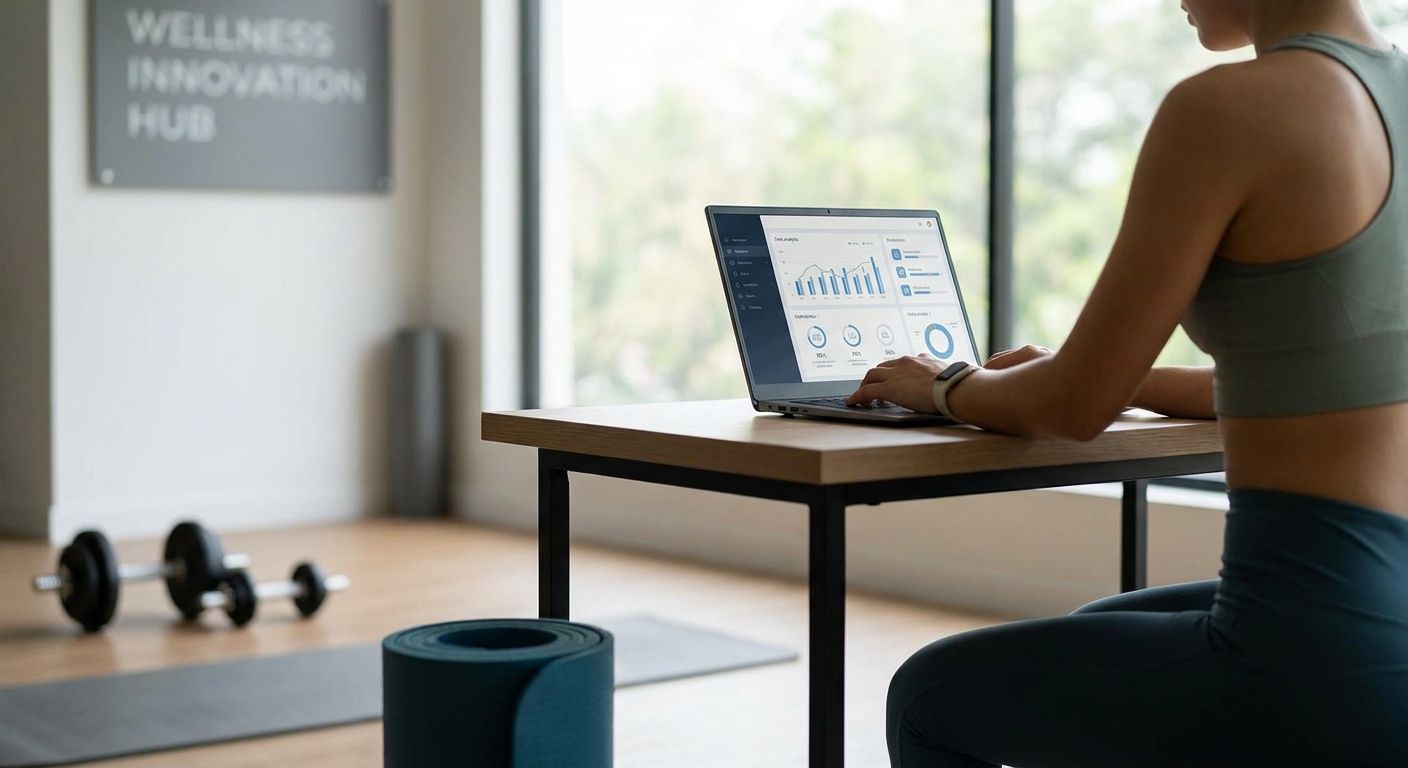
A gym chain, a protein brand, or a fitness app doesn't just compete for a Google featured snippet anymore — it competes to be the name ChatGPT, Gemini or Perplexity says out loud when someone asks "what's the best home gym for a small apartment" or "best whey protein for cutting." AI visibility tracking for fitness brands means measuring whether your brand gets named, cited or recommended in those answers, not just whether it ranks on page one.
- AI visibility tracking for fitness brands means measuring citations across ChatGPT, Gemini, Perplexity and Copilot, not just clicks. Koalr does this — Buy.
- GA4 and Semrush AI referral reports only catch clicks, missing citations that never produced one — treat them as a Hold, not a primary source.
- Manual prompt spreadsheets stall once you're covering nutrition, equipment and studio-locator queries at once — Skip.
- Generic SEO rank trackers with a bolted-on AI panel flag if you show up anywhere, not whether you're the recommendation — Skip.
- Prioritize competitor share of voice by category — supplements, gym equipment, studio franchises, fitness apps — not generic brand mentions.
Why this matters for fitness and wellness brands in 2026
Supplement buyers, gym shoppers and people picking a fitness app now start the research conversation inside an AI chat window, not a search box. That conversation ends with a name — a protein brand, a piece of equipment, a studio, an app — and if your brand isn't the name, a competitor's is.
GA4 and tools like Semrush can tell you when someone clicked through from an AI answer. Neither can tell you about the citation that named your competitor instead and never produced a click at all. That gap is the whole reason AI visibility tracking for fitness brands exists as its own discipline in 2026, separate from standard analytics.
Who this is for
This guide is built for marketing leads at gym chains and boutique studio franchises, supplement and sports-nutrition D2C brands, subscription fitness apps, wearable and health-tech companies, and wellness studios covering yoga, recovery or spa services. If your buyers ask an AI assistant "what's the best protein powder for muscle gain" or "best recovery studio near me" before they ever open a search engine, this is your buyer profile — the same logic that applies to AI visibility tracking for D2C brands applies here, just with a fitness and wellness prompt set.
What to look for in AI visibility tracking for fitness brands
Multi-engine coverage that matches where your buyers actually ask
Fitness and wellness buyers split across ChatGPT for workout and nutrition plans, Perplexity for product comparisons, and Google AI Overviews for local studio and gym searches. A tool that only watches one engine misses two-thirds of the conversation.
Citation vs. mention vs. recommendation
A mention is your brand's name appearing somewhere in an AI answer. A citation is your content being sourced. A recommendation is the AI actually telling the user to buy or book with you. These three are not the same signal, and a tracking tool that collapses them into one number is hiding the metric that actually matters for revenue.
Prompt sets built on real fitness and wellness buyer language
"Best whey protein for cutting" and "best gym near me for beginners" behave differently in an AI answer than a generic "best protein powder" prompt. A tracking setup that reuses one generic prompt list across every industry will miss the queries your actual buyers type.
Competitor share of voice by category
A supplement brand doesn't compete with a gym equipment retailer for AI recommendations — it competes with the three or four other protein brands that keep getting named in the same answers. Share of voice only means something when it's measured against the right competitor set, the same way it does for AI visibility tracking for e-commerce brands, where category-specific competitors decide what "winning" looks like.
Tracking cadence that keeps up with how fast answers change
Google AI Overviews and chat-based answers reshuffle their cited sources far more often than a classic search results page reshuffles page one. A monthly check misses the week your competitor took your spot — see how to track your brand in ChatGPT and AI answers for what a workable cadence looks like in practice.
The picks: what actually tracks AI visibility for fitness brands
Koalr — the purpose-built pick
Koalr tracks citations, mentions and recommendations across six answer engines — ChatGPT, Gemini, Perplexity, Claude, Copilot and Google AI Overviews — in one dashboard, built around the AI Visibility Score and Share of Voice metrics rather than referral-click proxies. For a fitness or wellness brand running nutrition, equipment and studio-locator prompts side by side, that's the difference between guessing and knowing. Buy.
GA4 + Semrush AI referral reports — the analytics workaround
These tools show you the sessions that arrived from an AI engine's outbound link. They show nothing about the citation that named a competitor instead and never generated a click at all — the exact gap that separates AI traffic analytics from AI visibility. Keep them as a secondary signal on conversion, not as your primary source of truth. Hold.
Manual prompt spreadsheets — the DIY approach
Someone types a handful of prompts into ChatGPT and Perplexity by hand, logs the answers, repeats weekly. It works for a proof of concept and stalls the moment you're trying to cover nutrition, equipment and studio queries across five competitors at once. Skip once you're past the pilot stage.
Generic SEO rank trackers with an AI add-on — the retrofit
These were built to track blue-link position and have bolted on a panel that flags whether your domain shows up anywhere in an AI answer. That's not the same as knowing whether you're the brand being recommended versus one of five names dropped in a list. Skip.
See your AI visibility score
Track citations, mentions and share of voice across six AI engines.
What to avoid
- Treating AI referral traffic as full AI visibility. GA4 and Semrush only see the click that happened — not the citation that never converted to a click, which is often the majority of what's actually being said about your brand.
- Counting any mention as a win. A wellness brand named once in a five-item list is not the same as being the single recommendation an AI gives — track the difference, not the raw mention count.
- Running one generic prompt set across every product line. A gym equipment prompt set, a supplement prompt set and a local studio prompt set need to be built and tracked separately, because the AI answers to each look nothing alike.
“If your AI visibility tool can't tell a mention from a recommendation, it's measuring noise, not signal.”
Verdict comparison
| Approach | Engine coverage | Citation vs. mention | Competitor share of voice | Verdict |
|---|---|---|---|---|
| Koalr | ChatGPT, Gemini, Perplexity, Claude, Copilot, Google AI Overviews | Yes | Yes | Buy |
| GA4 + Semrush AI referral reports | Referral clicks only | No | No | Hold |
| Manual prompt spreadsheets | Whatever you type by hand | Partial | No | Skip |
| SEO rank tracker + AI add-on | Limited, presence only | No | No | Skip |
FAQ
What's the best way to track AI visibility for fitness brands in 2026?
The best approach in 2026 tracks citations, mentions and recommendations across ChatGPT, Gemini, Perplexity, Claude, Copilot and Google AI Overviews using prompt sets built around real fitness and wellness buyer language. A dedicated AI visibility platform like Koalr does this in one dashboard instead of stitching together referral-traffic reports.
Is AI visibility tracking different from SEO for fitness brands?
Yes. SEO measures ranking position on a search results page, while AI visibility tracking measures whether an AI engine names, cites or recommends your brand inside a generated answer. A fitness brand can rank well in classic search and still never get named in an AI answer.
How much does AI visibility tracking cost for a fitness or wellness brand?
Cost varies by how many AI engines, competitors and prompts you're tracking, so check current plans directly with the platform you're evaluating. Budget for it as a separate line item from your SEO or paid media tools rather than expecting one platform to cover both.
Can GA4 show me when ChatGPT recommends my supplement brand?
No. GA4 only shows sessions that arrived from an AI engine's outbound link, so it misses every citation or recommendation that named your brand but didn't produce a click. That gap is why AI traffic analytics and AI visibility tracking are two separate measurements.
What's the difference between a citation and a mention in AI answers?
A mention is your brand's name appearing anywhere in the answer text. A citation means the AI sourced your content directly, and a recommendation means the AI told the user to actually buy or book with you. Fitness brands should track all three separately, not collapse them into one score.
How often should a gym chain or fitness app check its AI Overview presence?
Weekly, at minimum, because Google AI Overviews and chat-based answers reshuffle cited sources far more often than a standard search results page reshuffles page one. Monthly checks routinely miss the week a competitor took your spot.
Do wearable and health-tech brands need AI visibility tracking too?
Yes. Buyers comparing wearables and health-tech products increasingly ask AI assistants direct comparison questions before visiting a retailer site, so the same citation, mention and recommendation gaps apply. The prompt set just needs to reflect device-comparison language instead of nutrition or studio-locator language.
Is Perplexity or ChatGPT more important to track for fitness brands?
Both matter, but for different reasons: ChatGPT tends to dominate workout-plan and nutrition-advice queries, while Perplexity leans toward direct product comparisons. Tracking only one engine leaves a real blind spot in either direction.
One last thing
Google AI Overviews cite different sources for the same query far more often week to week than a classic search results page reshuffles its top ten. If you're only checking your AI presence monthly, you're finding out about a lost recommendation weeks after a competitor's brand replaced yours — track weekly, not monthly, if catching the shift matters more than reporting on it after the fact.


