

Semrush is strong at keyword research, competitor analysis and SEO reporting. Its SEO rankings and traffic estimates do not, by themselves, tell you whether an answer engine recommends your brand. The best Semrush alternative in 2026 is Koalr if you need AI visibility tracking; Ahrefs if you need a replacement centred on SEO research.
- For Semrush alternatives focused on AI visibility, choose Koalr to track your brand across answer engines.
- Choose Ahrefs for keyword and backlink research, not as proof that an answer engine recommends your brand.
- Choose Screaming Frog for technical crawling and Google Search Console for your own Google search performance.
- Keep SEO reporting, AI visibility and referral traffic separate: they answer different marketing questions.
Why this matters
Searching for Semrush alternatives in 2026 brings together several different buying decisions. Replacing a keyword research tool is not the same job as measuring citations in ChatGPT, diagnosing crawl problems or attributing website visits.
Choose the measurement job before choosing the software. Otherwise, you replace a familiar dashboard with a different dashboard and leave the original question unanswered.
For a SaaS marketing team, the distinction is practical. You need to know which pages attract search demand, whether answer engines include your product in relevant buying conversations, and what visitors do after arriving. No single metric establishes all of that.
Semrush alternatives at a glance
The table compares each option by its core purpose. These are not interchangeable replacements, and the ranking reflects the measurement task rather than a claim that one product wins every category.
| Tool | Best for | Standout capability | Difference from Semrush |
|---|---|---|---|
| Semrush | Broad SEO and competitor research | Keyword research, site audits and competitive reporting | The benchmark when you need several SEO workflows together |
| Koalr | Marketing teams measuring AI visibility | Tracking brand appearances across ChatGPT, Gemini, Perplexity, Claude, Copilot and Google AI Overviews | Focuses on how your brand appears in answers |
| Ahrefs | SEO teams prioritising research | Backlink analysis and keyword research | Another SEO research suite, rather than a change in measurement category |
| Screaming Frog SEO Spider | Technical SEO specialists | Crawling websites to inspect URLs and technical signals | A focused crawler rather than a broad marketing research suite |
| Google Search Console | Teams measuring their own Google search performance | Search clicks, impressions, queries and indexing reports | Uses data for your verified properties rather than competitor estimates |
| Google Analytics 4 | Teams measuring website behaviour and conversions | Acquisition, events and attribution reporting | Measures visits and actions, not unseen brand appearances in answers |
1. Koalr: best for AI visibility tracking
Koalr is AI visibility software for marketing teams that need to track and improve how their brand appears in answer engines. Its stated scope covers ChatGPT, Gemini, Perplexity, Claude, Copilot and Google AI Overviews. That makes it a different buying decision from replacing a conventional SEO research suite.
Koalr is best for marketing teams whose priority is tracking their brand in AI-generated answers. Start here when leadership asks whether your brand appears in relevant answers, rather than where a page ranks for a keyword.
Where it shines
- Its purpose matches the question of brand appearance in answer engines.
- Its stated platform scope includes conversational assistants and Google AI Overviews.
- It gives marketing teams a category-specific option to evaluate alongside existing SEO reporting.
Where it falls short
- AI visibility tracking does not replace the need to measure search clicks and website conversions.
- A brand appearance is not proof of a sale, a qualified lead or a recommendation.
- Teams primarily buying keyword research or technical crawling should evaluate tools designed for those jobs.
Before choosing an AI visibility platform in 2026, bring actual buyer questions to the evaluation. Ask to see the evidence behind a result: the answer, the brand reference, the source citation and the context in which the brand appears. Assess these separately rather than accepting one headline score as the whole report.
Best for: Marketing teams adding answer-engine measurement to their search workflow.
Verdict: Buy for AI visibility tracking, not as an assumed replacement for every SEO task.
2. Ahrefs: best for keyword and backlink research
Ahrefs is the closer alternative when your Semrush replacement needs to remain an SEO research suite. Its established capabilities include keyword research, backlink analysis, rank tracking and site auditing. Your buying decision is about the research workflow, not whether to stop measuring SEO.
Use your actual domain and competitors in the evaluation. A feature checklist cannot tell you whether the research produces useful decisions for your team.
Where Ahrefs shines
- Backlink research supports analysis of referring domains and linked pages.
- Keyword research helps you investigate search demand and competing pages.
- Site auditing and rank tracking support ongoing SEO work alongside research.
Where Ahrefs falls short
- Research estimates are not your own analytics or search performance records.
- A backlink report does not establish that an answer engine cited or recommended your brand.
- Changing suites still requires rebuilding the reports and routines your team relies on.
| Dimension | Ahrefs | Semrush |
|---|---|---|
| Keyword research | Supports keyword discovery and analysis | Supports keyword discovery and analysis |
| Backlink analysis | Supports link and referring-domain research | Supports link and referring-domain research |
| Technical auditing | Includes site auditing | Includes site auditing |
| Selection test | Evaluate the research on your domain | Benchmark against your existing research workflow |
Do not choose on the number of menu items. Compare how each tool handles a real question, such as identifying which competitor pages attract relevant search demand and which of your pages need attention.
Best for: SEO teams replacing a research suite while keeping keyword and backlink analysis central.
Verdict: Buy if Ahrefs performs your priority research tasks better in a direct evaluation.
3. Screaming Frog: best for technical site investigations
Screaming Frog SEO Spider crawls websites and exposes technical information about their URLs. It is useful when the next decision concerns response codes, redirects, page titles, canonical tags or internal links. That is a narrower job than researching an entire search market.
Where Screaming Frog shines
- You can inspect technical signals at URL level.
- Crawl data helps connect an issue to the pages that need fixing.
- A focused crawl suits investigations into redirects, metadata and internal linking.
Where Screaming Frog falls short
- A crawl is not a keyword demand study or competitor traffic report.
- Technical findings still need interpretation and prioritisation.
- A technically accessible page is not automatically selected as an answer-engine source.
| Dimension | Screaming Frog SEO Spider | Semrush |
|---|---|---|
| Primary job | Detailed website crawling | Broader SEO research and reporting |
| Technical inspection | Crawl-based URL analysis | Site audit reporting |
| Market research | Not the purpose of the crawler | Keyword and competitor research |
In a 2026 tool review, choose Screaming Frog when your bottleneck is understanding the website itself. Keep another measurement source for search performance and another for answer-engine appearances.
Best for: Technical SEO practitioners investigating specific website problems.
Verdict: Buy for technical crawling; skip it as a whole-suite replacement.
4. Google Search Console: best for your own search performance
Google Search Console reports Google search performance for properties you verify. Its clicks, impressions, queries and indexing information help you understand what happens to your own site in Google Search. It is a useful reference point when a third-party estimate and your observed performance tell different stories.
Where Google Search Console shines
- You can examine clicks and impressions for your own property.
- Query and page views connect search performance to specific content.
- Indexing reports help investigate whether Google can include your pages in search.
Where Google Search Console falls short
- It does not provide equivalent performance access to competitors' properties.
- It is not a replacement for backlink or market-wide keyword research.
- Its reports do not establish your brand's visibility across ChatGPT, Claude or Perplexity.
Best for: Teams grounding SEO decisions in their own Google search data.
Verdict: Hold as a core measurement source; skip it as the sole replacement for competitive research.
5. Google Analytics 4: best for visits and conversions
Google Analytics 4 measures website and app activity through events. Acquisition reporting helps you investigate where recorded visits came from, while key events help connect those visits to business actions. It belongs in the evaluation when the real question is whether traffic produces results.
Where Google Analytics 4 shines
- It connects recorded acquisition with on-site behaviour.
- Events let you measure actions relevant to your business.
- Referral analysis helps investigate visits arriving from identifiable answer-engine sources.
Where Google Analytics 4 falls short
- It cannot record a brand mention that produces no website visit.
- Referral attribution depends on the information available with the visit and your implementation.
- Traffic performance does not prove how often your brand appeared in answers.
Best for: Marketing teams measuring what visitors do after arriving.
Verdict: Hold for outcome measurement; skip it as an AI visibility substitute.
Why people switch from Semrush
A useful switch starts with a specific requirement, not a complaint about having too many features. These are decision criteria, not claims about Semrush outages, contract changes or customer behaviour.
- Different evidence: You need to inspect brand appearances in answer engines, not infer them from search rankings.
- Different depth: You need a focused technical crawl to investigate URL-level problems.
- Different research workflow: Your team wants to compare how another SEO suite handles its keyword and backlink work.
- Different outcome: You need your own search performance or website conversion data rather than another market estimate.
These requirements do not always justify cancelling Semrush. Adding a specialist measurement source is a different decision from replacing the suite.
For the measurement model behind that distinction, use the guide to combining AI visibility data with SEO rank tracking. Keep rankings, answer appearances and visits separate before drawing conclusions across them.
How to evaluate a replacement in 2026
Run a task-based evaluation before migrating reports. The following is a suggested protocol, not a benchmark or a claim about any tool's limits.
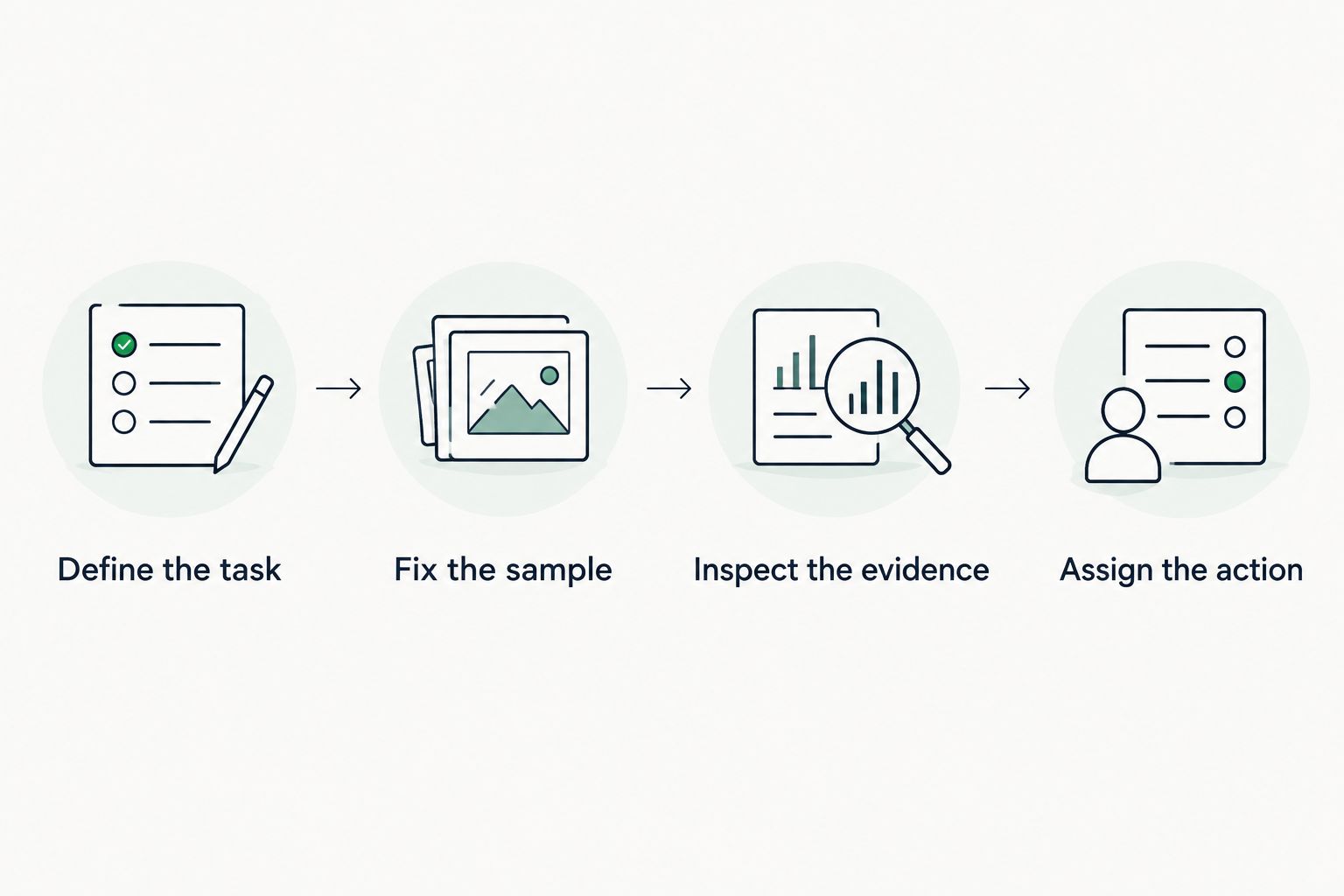
Define the task
Write down the decision the tool must support. Examples include choosing pages to refresh, finding redirect problems or checking whether answer engines name your brand in category comparisons. Assign an owner to that decision.
Fix the sample
For an answer-engine evaluation, start with 20 buyer prompts, repeat each prompt 3 times, and test 2 relevant markets if your business serves them. These are proposed evaluation quantities; adjust them to your coverage needs. Keep wording and conditions consistent so you can interpret the results.
Inspect the evidence
Separate a mention, a citation and a recommendation. A mention names the brand; a citation identifies a source; a recommendation advises choosing an option. They can overlap, but they are not equivalent.
Assign the action
Require every useful finding to lead to a decision. A crawl issue needs an affected URL and fix; an answer visibility issue needs the relevant prompt and an explanation of what the answer actually says. A dashboard without an action is not enough.
Before committing, check how the new workflow preserves your existing reporting context. Record metric definitions, tracked queries and reporting dates; an apparent change after migration can reflect a different measurement method rather than a change in performance.
When staying with Semrush is the right call
Stay with Semrush when its research and reporting already support the SEO decisions you need to make. Adding answer-engine measurement does not invalidate useful keyword, backlink or audit work.
For your 2026 review, separate replacement from expansion. Replace a workflow that fails your task-based evaluation; add a specialist source when the question belongs to a different measurement category. Do not discard working SEO reporting just to put every metric under one vendor.
FAQ
What's the best Semrush alternative for AI visibility?
Koalr is the best fit in this comparison for marketing teams prioritising AI visibility tracking. Its stated purpose is tracking and improving brand appearances across ChatGPT, Gemini, Perplexity, Claude, Copilot and Google AI Overviews.
Is Ahrefs better than Semrush?
Ahrefs is an alternative for keyword, backlink and SEO research, not a universal winner over Semrush. Evaluate both against the same domain, competitors and research tasks before choosing.
Can Screaming Frog replace Semrush?
Screaming Frog can serve the technical crawling part of your workflow, but it is not a whole-suite substitute. Keep separate tools for market research, performance measurement and answer-engine visibility.
Can Google Search Console replace an SEO research suite?
Google Search Console supplies your own Google search performance and indexing information, not equivalent access to competitors' data. Use it to ground decisions about your property while retaining research tools where needed.
Can Google Analytics 4 track AI visibility?
Google Analytics 4 measures recorded website activity, not brand appearances that produce no visit. Use referral analysis for identifiable incoming visits and answer-level measurement for mentions, citations and recommendations.
Should I cancel Semrush when adding AI visibility tracking?
Keep Semrush if it still supports your keyword research, competitor analysis and SEO reporting. Adding answer-engine measurement addresses a different question and does not automatically justify replacing existing workflows.
What's the difference between an AI mention and a citation?
A mention names a brand, while a citation identifies a source used or referenced in the answer. A recommendation goes further by advising the user to choose an option, so report these outcomes separately.
One last thing
Your brand can be cited without being recommended. An answer can reference your page while advising the reader to choose a competitor.
Make answer context part of the buying test. Ask whether the reporting lets you distinguish source inclusion from brand preference, then assign a different response to each. That distinction is more useful than celebrating every appearance as a win.


