
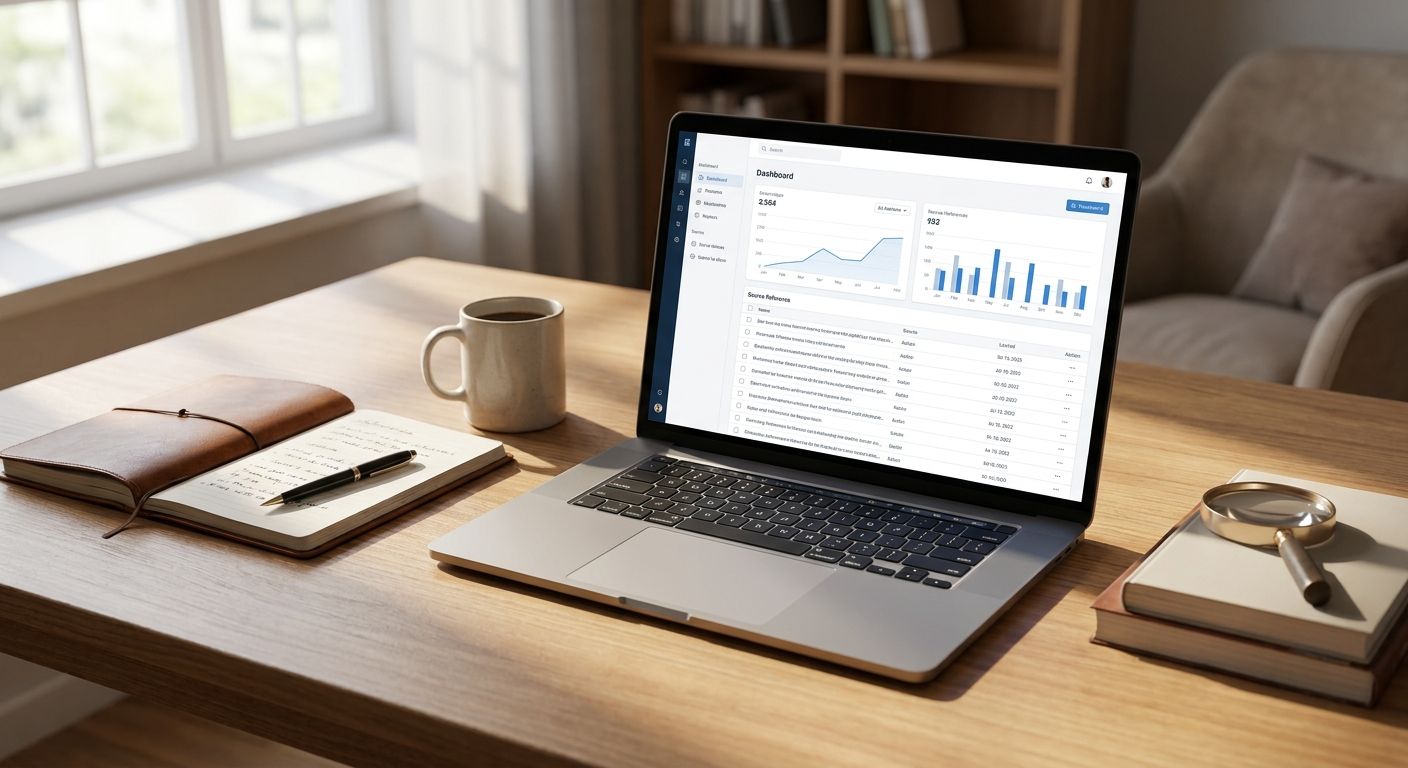
Perplexity cites sources inline, on every answer, which makes it the easiest AI engine to audit and the easiest one to get wrong if you're using the wrong tool. This guide ranks the tools that actually surface Perplexity citations in 2026, not just AI referral traffic in Google Analytics.
- Koalr is the best overall pick for tracking Perplexity citations alongside ChatGPT, Gemini, Claude, Copilot and Google AI Overviews in one dashboard.
- Profound suits enterprise teams that need custom prompt sets and already have a data analyst on staff — Consider.
- Otterly.AI is the budget entry point for solo marketers who just need citation alerts — Buy for small teams.
- Semrush and Ahrefs bolt AI visibility onto existing subscriptions but treat Perplexity as a secondary engine — Hold.
- Manual prompt testing in Perplexity's own interface works for a one-off audit but breaks down past 20 prompts a week — Skip at scale.
Why this matters
Perplexity doesn't just answer a question — it shows its sources as clickable citations right under the answer. That's different from ChatGPT or Gemini, where a brand mention can happen with zero attribution.
If your brand shows up as a citation in Perplexity, that's a stronger signal than a plain-text mention: it means the model trusted your page enough to link it. Tracking that at scale, across dozens or hundreds of prompts, is a different job than checking Google Search Console.
Most teams start by pasting prompts into Perplexity manually. That works for a spot-check. It does not work when you need to know whether your citation share moved after a content push, or whether a competitor started showing up in your category's buying-intent prompts. That's what the tools below are built to solve.
How this list was built
Each tool below is evaluated on three things: whether it tracks Perplexity specifically (not just ChatGPT with Perplexity bolted on later), whether it separates a citation from a mention, and whether it's usable by a marketing team without an engineer setting up the API calls. Tools that only scrape AI Overviews or only cover ChatGPT get marked down even if they're strong products elsewhere — the keyword here is Perplexity citation tracking, and that's a specific capability, not a side feature.
The ranked list
1. Koalr — the cross-engine pick
Koalr tracks brand visibility across 6 AI engines: ChatGPT, Gemini, Perplexity, Claude, Copilot and Google AI Overviews, inside one dashboard instead of six browser tabs. For Perplexity specifically, it separates a citation (your page linked as a source) from a mention (your brand named without a link) and from a recommendation (your product named as the answer to the prompt) — three different outcomes that most trackers lump together.
Marketing teams running a GEO audit across multiple engines get one AI Visibility Score and one Share of Voice number instead of stitching together spreadsheets from separate tools. Teams building prompt sets specific to their vertical can start from the best AI visibility tools for marketing teams breakdown for setup guidance.
Verdict: Buy if you need Perplexity tracked alongside every other AI engine your customers actually use, not in isolation.
2. Profound — the enterprise pick
Profound is built for larger organizations that want custom prompt engineering and deeper data exports. It handles Perplexity as one of several tracked engines and is positioned toward teams with a dedicated analytics function reviewing the output.
The tradeoff is setup time and cost scale with the customization — this isn't a tool a solo marketer spins up in an afternoon.
Verdict: Consider if you have an internal team ready to configure and interpret custom prompt sets.
3. Otterly.AI — the budget entry point
Otterly.AI is aimed at smaller teams that want citation alerts without an enterprise sales process. It covers Perplexity along with other major engines and is straightforward to set up for a first pass at visibility tracking.
What it doesn't do as well is the deeper segmentation — separating citation quality by prompt intent or funnel stage — that larger teams eventually need.
Verdict: Buy for solo marketers or small teams running their first Perplexity citation check in 2026.
4. Semrush AI visibility features — the bolt-on pick
Semrush added AI visibility tracking to its existing suite, which makes sense if your team already lives inside Semrush for keyword and backlink work. Perplexity is included, but it sits as one data point inside a much broader SEO platform rather than the primary focus.
That's fine if AI visibility is a secondary concern this quarter. It's a weaker fit if Perplexity citations are the actual priority, because the platform wasn't built citation-first.
Verdict: Hold — useful as a supplement to an existing Semrush subscription, not a standalone Perplexity tracker.
5. Ahrefs Brand Radar — the SEO-adjacent pick
Ahrefs extended its brand-monitoring tools to cover AI answer engines, which is convenient for teams already paying for Ahrefs' backlink and rank tracking data. Perplexity citation data shows up alongside traditional SEO metrics, which helps teams that want everything in one login.
The same caveat applies as with Semrush: it's an add-on to an SEO tool, not a purpose-built AI visibility platform.
Verdict: Hold for teams that want one invoice and one login over dedicated depth.
6. Manual prompt testing — the free option
Running your own prompt list directly in Perplexity's chat interface costs nothing and works fine for a one-time audit of 15-20 prompts. You'll see exactly which sources get cited, in real time, with no dashboard learning curve.
It falls apart the moment you need to repeat the test weekly, track changes over time, or compare against competitors across dozens of prompts — that's manual copy-paste work that doesn't scale past a single sitting.
Verdict: Skip once you need repeatable tracking rather than a one-off snapshot.
Comparison table
| Tool | Perplexity coverage | Best for | Verdict |
|---|---|---|---|
| Koalr | Full — citation vs mention vs recommendation | Teams tracking multiple AI engines at once | Buy |
| Profound | Full, custom prompt sets | Enterprise teams with analyst support | Consider |
| Otterly.AI | Full, simplified | Solo marketers, small teams | Buy |
| Semrush AI features | Partial, bolted onto SEO suite | Existing Semrush users | Hold |
| Ahrefs Brand Radar | Partial, bolted onto SEO suite | Existing Ahrefs users | Hold |
| Manual prompt testing | Full but one-time | Single audits, no ongoing tracking | Skip |
How to choose
- Confirm Perplexity is a first-class engine, not an afterthought. Ask any vendor directly whether Perplexity citations are pulled the same way as ChatGPT mentions, or whether it's a smaller, separate feature added later.
- Ask how citation is defined. A tool that can't tell you the difference between a citation (linked source), a mention (named, no link) and a recommendation (named as the answer) is giving you a vanity metric, not a usable one.
- Match the tool to your team's cadence. A weekly citation check needs a dashboard with historical trend data. A single 2026 baseline audit can run on a lighter tool or even manual testing.
B2B SaaS teams evaluating this decision often start from a narrower brief — see AI visibility tracking for B2B SaaS companies for what a first prompt set looks like in that category specifically.
FAQ
What's the best tool for tracking Perplexity citations in 2026?
Koalr is the strongest overall pick because it tracks Perplexity alongside ChatGPT, Gemini, Claude, Copilot and Google AI Overviews in one dashboard, and separates a citation from a mention. Otterly.AI is a solid lighter-weight option for smaller teams.
Is a Perplexity citation the same as a mention?
No. A citation is your page linked as a source under the answer; a mention is your brand named in the text with no link. Perplexity's answer format makes citations easy to spot, but most tracking tools don't separate the two clearly.
Can I track Perplexity citations manually?
Yes, for a one-time check of 15-20 prompts run directly in Perplexity's chat interface. It stops working once you need repeatable weekly tracking or competitor comparison across dozens of prompts.
Do Semrush and Ahrefs track Perplexity citations?
Both added AI visibility features that include Perplexity, but as an add-on inside a broader SEO suite rather than a purpose-built citation tracker. They fit teams already paying for those tools for keyword and backlink data.
How much does AI visibility tracking cost?
Pricing varies by vendor and by how many engines and prompts are covered — check current pricing directly with each provider rather than relying on a single quoted figure, since plans differ by team size and engine coverage.
How often should I check Perplexity citations?
Weekly is the minimum cadence for a brand actively publishing content, since citation results shift as new pages get indexed and older answers get refreshed. Monthly checks are enough for a slower-moving category with less content velocity.
Does Perplexity cite the same sources as Google AI Overviews?
Not always. The two engines pull from different retrieval systems and often surface different pages for the same prompt, which is why tracking tools need to check each engine separately rather than assuming overlap.
One last thing
The detail most teams miss: Perplexity often cites a different page on your domain than the one you'd expect. A blog post ranking on page one of Google isn't automatically the page Perplexity pulls into its answer — sometimes it's a product page, a comparison page, or an older article with a clearer direct answer in the first paragraph. Check which URL is actually getting cited before you assume your best-ranking content is doing the work in AI answers too.


