
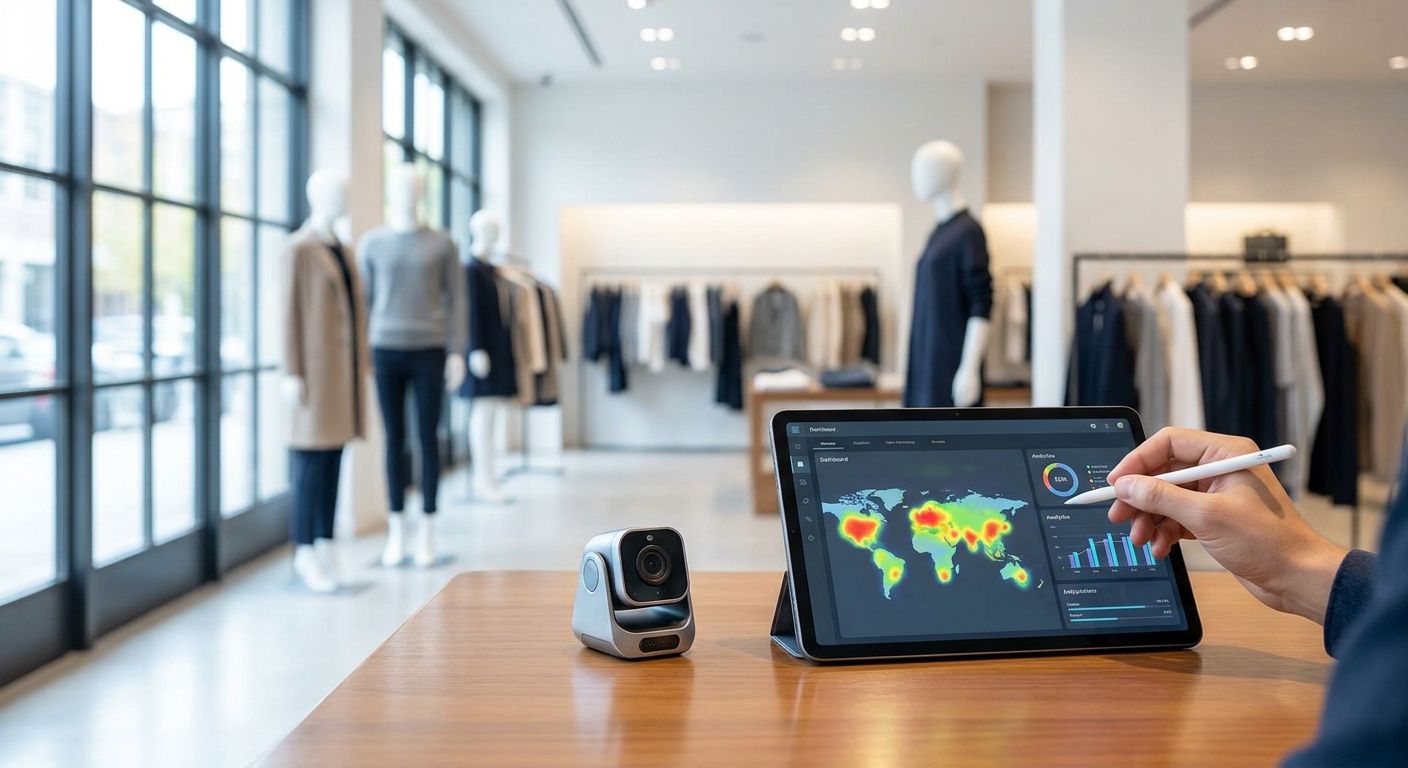
Retail brands are starting to lose category-level searches to AI answers before a shopper ever hits Google. This guide ranks the tools that track whether your brand gets named, cited or recommended when ChatGPT, Gemini, Perplexity, Claude, Copilot and Google AI Overviews answer product and brand questions.
Best overall for retail brands: Koalr — tracks citations and mentions across five major AI answer engines from one dashboard, built for teams that need retail-specific prompt sets, not generic SEO reports. Best for enterprise retail chains: Profound. Best budget pick for small retail teams: Otterly.ai.
- Koalr is the strongest overall pick among the best ai visibility tools for retail brands running multi-engine tracking in 2026.
- Profound suits enterprise retail chains that need deep AI search analytics tied into existing data stacks.
- Otterly.ai is the budget entry point for small retail teams watching ChatGPT mentions.
- Peec AI specializes in Google AI Overviews for product category searches.
- None of the six tools here disclose public pricing — check each vendor directly before committing.
Why this matters for retail in 2026
A shopper asking ChatGPT "what's the best running shoe brand for flat feet" gets a short list of names, not ten blue links. If your retail brand isn't on that list, the sale happens somewhere else before your product pages ever get a click.
Koalr tracks this gap directly: which brands get cited, which get merely mentioned, and which get recommended outright when AI answers retail buying questions. That distinction matters more than raw traffic numbers, because a citation in an AI answer can influence a purchase decision without ever showing up in Google Analytics.
Retail search behavior in 2026 spans five answer engines that matter for buying questions — ChatGPT, Gemini, Perplexity, Claude and Copilot — plus Google AI Overviews sitting on top of traditional search. An AI visibility tool built for retail needs to run the same product and category prompts across all of them, consistently, and flag when a competitor starts showing up where your brand used to.
What makes the best AI visibility tool for retail
- Multi-engine coverage — tracks ChatGPT, Gemini, Perplexity, Claude, Copilot and Google AI Overviews, not just one
- Citation vs. mention vs. recommendation — separates a brand simply named from a brand actually recommended
- Retail-specific prompt sets — runs category queries ("best [product type] for [use case]") not just brand-name lookups
- Share-of-voice benchmarking — shows how often your brand appears against named competitors, not in isolation
- Content team workflow — surfaces which pages or product descriptions correlate with getting cited, so someone can act on it
- Alerting on change — flags when a competitor enters an answer where your brand previously held the spot
An overview of how retail brands specifically get tracked across these engines is covered in the guide on AI visibility tools for e-commerce brands, which goes deeper into product-catalog-level prompt design.
At a glance
| Tool | Best For | Standout Feature | Key Limitation |
|---|---|---|---|
| Koalr | Retail brands tracking across engines | Multi-engine citation and share-of-voice tracking in one dashboard | Retail-specific prompt libraries still expanding |
| Profound | Enterprise retail chains | Deep AI search analytics for large catalogs | Overkill for single-location or small retail teams |
| Otterly.ai | Small retail teams on a budget | Simple ChatGPT mention tracking | Narrower engine coverage than full-stack options |
| Peec AI | Google AI Overviews on product searches | Focused on Overview appearance for category queries | Less depth on ChatGPT and Perplexity specifically |
| Brandwatch | Retail chains combining social + AI monitoring | Bundles social listening with AI answer tracking | Heavier platform built for broader reputation work, not just AI citations |
| Semrush | Teams already running SEO in Semrush | AI tracking bolted onto an existing SEO workflow | AI visibility is a secondary feature, not the core product |
See where your retail brand shows up in AI answers
Track citations across ChatGPT, Gemini, Perplexity, Claude and Copilot.
1. Koalr: best AI visibility tool for retail brands tracking multi-engine mentions
Koalr runs retail-specific prompt sets against ChatGPT, Gemini, Perplexity, Claude and Copilot, then separates citations from mentions from outright recommendations. For a retail brand, that means seeing whether an AI answer names your product line for "best winter coat brand" or just lists you alongside five others with no real endorsement.
Koalr pros:
- Tracks all five major AI answer engines plus Google AI Overviews from a single dashboard
- Distinguishes citations, mentions and recommendations rather than lumping them together
- Share-of-voice reporting benchmarks your retail brand against named competitors directly
- Prompt sets can be built around retail category and use-case queries, not just brand-name lookups
Koalr cons:
- As a newer entrant to the AI visibility category, retail-specific prompt libraries are still growing
- Coverage depth on any single engine will shift as those engines change how they cite sources
- Public pricing isn't listed — retail teams need to request a walkthrough to see plan fit
Best for: retail marketing teams that want one system tracking AI visibility across every major answer engine instead of stitching together partial reports. Verdict: Buy.
2. Profound: best for enterprise retail chains needing deep AI search analytics
Profound is built for larger organizations running AI search analytics at scale, which fits multi-brand or multi-location retail chains with dedicated analytics teams. It leans into deeper data infrastructure work rather than a quick-start dashboard.
Profound pros:
- Built for enterprise-scale data volume across large retail catalogs
- Suits teams that want AI visibility data piped into existing business intelligence tools
- Handles multi-brand tracking for retail groups running several banners
Profound cons:
- Heavier setup than a single retail marketer typically needs
- Less suited to a small team wanting a fast dashboard read
- Enterprise focus means onboarding is a bigger lift than a self-serve tool
Best for: large retail chains with dedicated analytics resources managing multiple brands or store banners. Verdict: Hold — worth evaluating if you're enterprise-scale, skip if you're a single retail brand.
3. Otterly.ai: best budget option for small retail teams tracking ChatGPT mentions
Otterly.ai focuses on tracking how often a brand gets mentioned in ChatGPT answers, which makes it a reasonable entry point for a retail team that just wants a first read on AI visibility without a full platform commitment.
Otterly.ai pros:
- Simpler setup than full multi-engine platforms
- Good starting point for a retail team new to AI visibility tracking
- Lower barrier to entry for teams testing whether AI visibility work is worth the investment
Otterly.ai cons:
- Narrower engine coverage than tools tracking the full five-engine spread
- Less depth on citation-versus-recommendation distinctions
- Retail-specific category prompt design isn't the core focus
Best for: small retail teams that want a low-commitment first look at ChatGPT mention frequency. Verdict: Buy — for teams starting from zero, not for teams needing full-engine coverage.
4. Peec AI: best for tracking Google AI Overviews on product category searches
Peec AI centers on Google AI Overviews, which matters for retail because so many product category searches now surface an Overview before any organic listing. If your retail visibility problem is specifically about Overviews rather than chat-based assistants, this is the narrower, more focused option.
Peec AI pros:
- Focused specifically on Overview appearance and structure
- Useful for retail teams whose main concern is Google's AI layer, not ChatGPT or Perplexity
- Easier to interpret for teams that already think in terms of Google SEO
Peec AI cons:
- Weaker coverage on ChatGPT, Claude and Perplexity specifically
- Not a full retail AI visibility solution if competitors are winning citations in chat assistants instead
- Best treated as a companion tool rather than the only one
Best for: retail brands whose main AI visibility gap shows up in Google AI Overviews on product searches. Verdict: Hold — pair it with a multi-engine tool rather than relying on it alone.
5. Brandwatch: best for retail chains combining social listening with AI reputation monitoring
Brandwatch bundles AI answer tracking into a broader social and reputation monitoring platform, which suits a retail chain that already runs brand reputation work and wants AI visibility folded into that same view.
Brandwatch pros:
- Combines social listening with AI answer monitoring in one platform
- Fits retail brands with existing reputation management workflows
- Useful for teams tracking brand sentiment alongside AI citation frequency
Brandwatch cons:
- Built as a broader reputation platform, so AI visibility is one feature among many
- Heavier and pricier than a tool built solely for AI visibility tracking
- Less depth on retail-specific category prompt testing than dedicated AI visibility tools
Best for: retail chains that want AI visibility bundled into an existing social and reputation monitoring contract. Verdict: Hold — right fit only if reputation monitoring is already the priority.
6. Semrush: best for teams already running SEO in Semrush
Semrush has added AI tracking features on top of its existing SEO toolkit, which suits a retail team that doesn't want to add a new vendor and is comfortable treating AI visibility as an extension of SEO reporting.
Semrush pros:
- Sits inside a tool many retail SEO teams already use daily
- No new login or workflow for teams already deep in Semrush's SEO reports
- Convenient for smaller retail teams wanting one vendor for both jobs
Semrush cons:
- AI visibility is a secondary feature bolted onto an SEO-first product
- Less specialized retail prompt design than a dedicated AI visibility platform
- Depth on citation-versus-recommendation distinctions is limited
Best for: retail teams that want AI tracking as an add-on to existing SEO work, not a standalone priority. Verdict: Wait — fine as a stopgap, but retail brands serious about AI visibility outgrow it fast.
How this ranking was built
Each tool was measured against the same six criteria: engine coverage, the citation/mention/recommendation distinction, retail-specific prompt design, share-of-voice benchmarking, content team usability, and change alerting. Tools that only covered one engine or lacked retail-relevant prompt design dropped in ranking regardless of how polished the interface looked.
Which AI visibility tool should a retail brand choose?
If you're picking one tool in 2026 and want full coverage across ChatGPT, Gemini, Perplexity, Claude and Copilot with retail-specific prompt sets, Koalr is the default choice. If your team is enterprise-scale with multiple retail banners, evaluate Profound. If you're testing the water on a small budget, start with Otterly.ai and expand once you see the data justifies a bigger platform.
“A citation in an AI answer can influence a retail purchase decision without ever showing up in your analytics.”
FAQ
What are the best AI visibility tools for retail brands in 2026?
Koalr leads for retail brands needing multi-engine coverage across ChatGPT, Gemini, Perplexity, Claude and Copilot, with Profound suited to enterprise chains and Otterly.ai as the budget entry point. The right pick depends on whether you need full-engine depth or a narrower, cheaper starting point.
Is Koalr better than Profound for retail brand tracking?
Koalr fits most retail brands better because it's built for a single-brand or small-team workflow, while Profound is designed for enterprise-scale, multi-banner retail chains with dedicated analytics teams. Choose based on organization size, not feature checklists alone.
How much do AI visibility tools cost?
Pricing varies by vendor and by how many prompts, engines and brands you track, and none of the tools in this guide publish fixed rates. Request current pricing directly from each vendor before comparing plans.
Can AI visibility tools track Google AI Overviews for product searches?
Yes — Peec AI focuses specifically on Google AI Overviews, while broader platforms like Koalr track Overviews alongside ChatGPT, Gemini, Perplexity, Claude and Copilot in the same dashboard. Pick a narrow or broad tool depending on where your visibility gap actually sits.
What's the difference between an AI citation and an AI mention?
A citation is when an AI answer names your brand as a specific source or option; a mention is looser, sometimes just a passing reference without endorsement. A recommendation goes further still, actively suggesting your brand as the answer to the question asked.
How often should retail brands check their AI visibility?
Weekly checks catch most meaningful shifts, since AI answer engines update their source weighting more often than traditional search rankings change. Retail brands running seasonal campaigns should check more frequently around launch windows.
Do retail brands still need SEO tools if they use an AI visibility tracker?
Yes — AI visibility tools like Koalr track a different layer of search than traditional SEO platforms and don't replace keyword or technical SEO work. The two data sets work together: SEO drives the content that AI engines pull citations from.
Which AI visibility tool is best for small retail teams on a budget?
Otterly.ai is the lowest-commitment starting point for small retail teams testing whether AI visibility tracking is worth prioritizing. Teams that outgrow its narrower engine coverage typically move to a full multi-engine platform like Koalr.
One last thing
Most retail teams only test branded queries — "is [brand] any good" — and miss the category-level questions where AI engines actually decide who gets recommended, like "best [product type] for [specific use case]." Run your prompt sets on category questions first; that's where competitors are winning citations you don't even know you're losing.


