
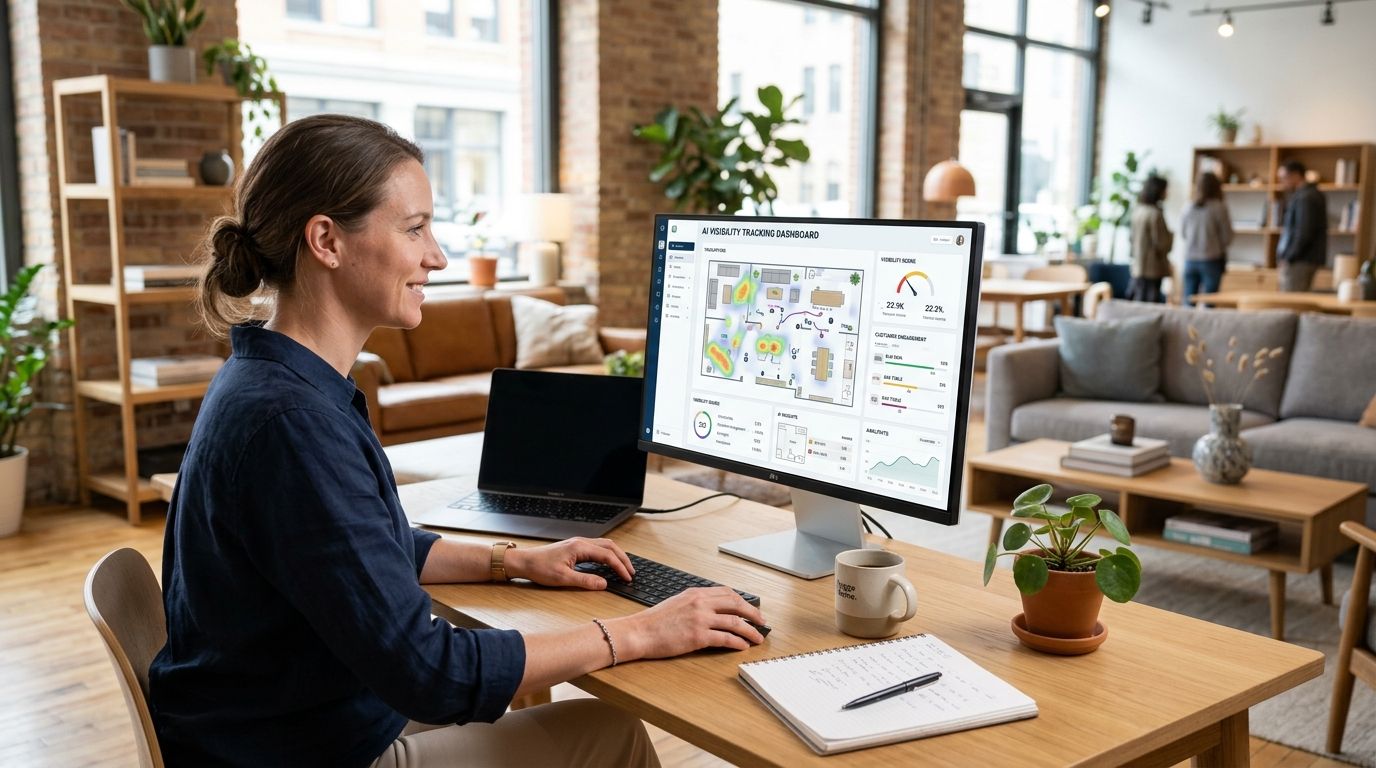
Furniture brand AI visibility tracking measures how often ChatGPT, Gemini, Perplexity, Claude, Copilot and Google AI Overviews name your brand when someone asks for a sofa recommendation, a mattress comparison, or "best furniture brands for small apartments." The furniture category has a specific problem: buyers research heavily before purchase, and AI assistants have started answering "what's the best couch for a studio apartment" directly instead of sending traffic to a search results page. If your brand isn't in that answer, you're invisible at the exact moment a buyer is deciding.
- AI visibility tracking for furniture brands means monitoring citations across ChatGPT, Perplexity, Gemini and Google AI Overviews for product-comparison and room-specific prompts.
- Furniture buyers research across multiple sessions before purchase, which makes AI-answer presence a bigger factor than a single click-through metric.
- Koalr tracks AI Visibility Score and Share of Voice for furniture-specific prompt sets, not just generic brand mentions.
- A citation without a click still shapes the shortlist a buyer builds before they ever visit a retailer's site.
Why AI visibility tracking matters for furniture brands
Furniture is a considered purchase. Buyers ask AI assistants comparison questions like "best mid-century modern dining tables for a small flat" or "which sofa brands ship without a strong chemical smell" long before they land on a product page. Those prompts get answered with two to four named brands, and the brands that don't appear simply don't make the shortlist.
This matters more for furniture than for categories with single-session purchases. A buyer might run five or six different prompts across ChatGPT and Perplexity over a week while furnishing a room, and each answer either reinforces your brand or reinforces a competitor's. Tracking which prompts trigger your brand and which trigger a rival is the only way to know where you're losing the shortlist.
GA4 and Similarweb show you referral traffic from AI platforms, but they can't show you the citation that never produced a click. A shopper who sees your brand named in a Perplexity answer, doesn't click, and later searches your name directly on Google is a conversion your analytics stack will never trace back to that AI answer. That is the gap AI visibility tracking closes in 2026.
Update your product pages for comparison prompts
AI engines pull specifics when answering "best X for Y" queries. Vague product copy gets skipped in favour of competitors with clear facts.
- Add explicit dimensions, materials and care instructions to every product page
- Write a plain-language "best for" line on each product (small spaces, pet owners, renters)
- Publish comparison content between your own product lines instead of leaving that gap for a third-party review site to fill
- Structure specs in tables, not paragraphs, so engines can extract them cleanly
- Keep return and delivery policy pages current, since AI answers about which furniture brand is easiest to return pull from these directly
Build a prompt set specific to your furniture category
Generic brand-name prompts miss most of the buying journey. A proper prompt set covers the questions buyers actually type.
- Room-specific prompts: "best sofa for a small living room 2026"
- Material and durability prompts: "most durable outdoor furniture brands"
- Budget-tier prompts covering entry, mid and premium ranges
- Comparison prompts naming you against two or three direct competitors
- Values-based prompts: sustainable materials, domestic manufacturing, assembly-free delivery
Test which prompts currently trigger your brand
Before fixing anything, find out where you stand. Run each prompt in your set across ChatGPT, Gemini, Perplexity and Copilot manually, or use a tool built for this. The guide to testing whether a prompt triggers your brand walks through the manual method step by step, and it is worth doing by hand at least once so you understand what the engines are actually pulling from.
- Log the exact prompt wording and platform for every test
- Record whether you were cited, mentioned without detail, or absent entirely
- Note which competitor names appeared alongside or instead of yours
- Repeat monthly, since answers shift as engines re-crawl and re-rank sources
Fix the pages losing citations to competitors
Once you know which prompts skip your brand, the fix is usually a content gap, not a technical one.
- Add named comparisons where competitors currently own the "vs" answer
- Publish buying guides for the specific room types or use cases your prompt set surfaces
- Add FAQ sections structured for direct extraction, following the FAQ structuring guide for AI citation
- Strengthen schema markup on product and review pages so engines can parse specs and variants without ambiguity
Measure Share of Voice against direct competitors
A single citation count tells you little without a comparison point. Share of Voice tells you what percentage of furniture-category prompts name you versus the two or three brands you actually compete against.
- Define your competitor set explicitly, not just the market leader
- Track Share of Voice per prompt cluster (room type, price tier, material) rather than one blended number
- Watch for seasonal shifts around the spring outdoor season and the winter holiday buying window
- Compare Share of Voice month over month, not from a single snapshot
This is the point where the manual approach breaks down. Running the same 40 to 60 prompts across five AI platforms by hand every month is not sustainable for a marketing team also managing product launches and paid campaigns. Koalr automates the prompt-set testing above, tracks AI Visibility Score and Share of Voice for furniture-specific queries continuously, and flags when a competitor starts appearing where you used to.
Monitor sentiment, not just presence
Being named is not automatically good. An AI answer that cites your brand alongside a complaint about assembly difficulty or shipping damage still shapes a buyer's decision.
- Track whether citations are neutral, positive or paired with a caveat
- Compare sentiment across platforms, since Perplexity and ChatGPT sometimes surface different review sources
- Flag recurring negative themes (assembly time, packaging damage, delivery delay) for the product or ops team
- Re-check sentiment after fixing an underlying issue to confirm the AI-answer language actually updated
“A citation without a click still shapes the shortlist a buyer builds before they ever visit a retailer's site.”
Comparing options for furniture brand AI visibility tracking
| Option | Best for | Key limitation |
|---|---|---|
| Manual prompt testing (spreadsheet, monthly) | Small furniture brands validating the problem before buying a tool | Time-intensive, no historical trend data, easy to miss platform-specific answer changes |
| GA4 plus Similarweb AI referral reports | Brands that only care about AI-driven traffic that converts | Misses citations that never produce a click, which is most of the furniture research journey |
| Koalr | Furniture and retail brands needing AI Visibility Score, Share of Voice and sentiment tracked across ChatGPT, Gemini, Perplexity, Claude and Copilot in one place | Requires an initial prompt set build to reflect your specific product categories |
Verdict: manual testing confirms the problem exists, but furniture brands running more than one product line need Share of Voice tracked continuously across platforms, which is what Koalr is built for.
See your furniture brand's AI visibility
Track citations, Share of Voice and sentiment across every major AI answer engine.
Common mistakes furniture brands make
- Treating AI visibility as a subset of SEO. Optimising for Google rankings does not guarantee an AI engine will cite you, and the practical approach to generative engine optimisation matters here because engines weigh structure and specificity differently than ranking factors do.
- Only tracking your own brand name. Furniture buyers rarely search your name directly early on; they ask category and comparison questions where you need to appear without being named.
- Ignoring seasonal prompt shifts. Outdoor furniture prompts and small-space furniture prompts peak at different points in 2026, and a static prompt set misses both windows.
- Skipping delivery and assembly detail in product content. These are the exact specifics AI engines pull into comparison answers, and their absence is why furniture brands lose citations to competitors with thinner but more specific copy.
- Checking visibility once and calling it done. AI answers change as models retrain and re-crawl sources, so a single audit from early 2026 tells you nothing about your standing later in the year.
FAQ
What is AI visibility tracking for furniture brands?
It is the practice of monitoring whether ChatGPT, Gemini, Perplexity, Claude and Copilot name your brand when answering furniture questions like room-specific or comparison prompts. It goes beyond referral traffic to capture citations that never produce a click.
How is this different from tracking AI referral traffic in GA4?
GA4 only shows sessions that clicked through from an AI platform. Most furniture buyers see a citation, do not click, and search the brand name later, which GA4 cannot attribute back to the AI answer.
How often should furniture brands check AI visibility?
Monthly at minimum, since AI answers shift as models re-crawl sources and competitors publish new comparison content. Seasonal categories such as outdoor furniture warrant a check right before their buying window.
Does schema markup help furniture brands get cited?
Yes. Clear product schema with dimensions, materials and variant data gives AI engines structured information to extract, which increases the odds of a direct citation over a vague mention.
Can a furniture brand be mentioned by AI without being recommended?
Yes, and the distinction matters. A mention lists the brand as one of several options; a recommendation names it as the best fit for the specific prompt, which is the outcome that influences a buying decision.
What prompts should furniture brands track?
Room-specific queries, budget-tier comparisons, material and durability questions, and direct comparisons against two or three named competitors. A generic brand-name prompt alone misses most of the buying journey.
Is AI visibility tracking worth it for a small furniture brand?
If buyers in your category research through AI assistants before purchase, yes. A smaller brand with fewer competitors named in AI answers has more to gain from closing a specific citation gap than a category leader already appearing everywhere.
One last thing
The furniture brands losing ground in AI answers right now are not the ones with weaker products. They are the ones whose product pages read like a catalogue instead of answering the specific question a buyer typed into ChatGPT. Fix the specificity gap before you fix anything else in 2026.


