
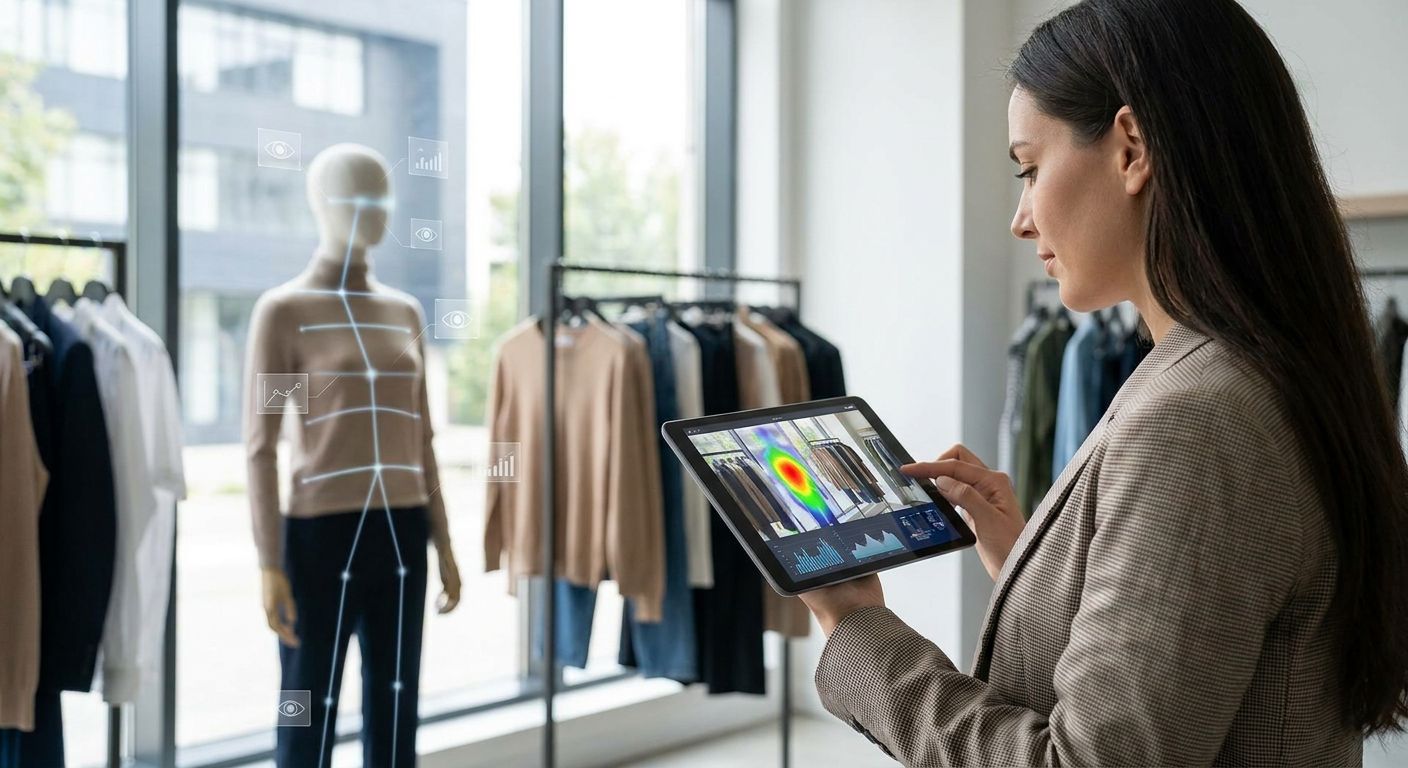
Fashion retail AI visibility tracking is the discipline of monitoring how a brand, its collections and its individual products get named — or left out — inside answers from ChatGPT, Gemini, Perplexity, Claude, Copilot and Google AI Overviews, with the goal of getting recommended the moment a shopper asks an AI assistant what to buy. Fashion runs on seasonal drops and trend cycles, so a citation earned last season doesn't carry into this one — the tracking has to move at the same speed as the collection calendar.
- AI visibility tracking for fashion retailers means monitoring citations per collection, not once a year.
- Koalr tracks fashion brand mentions across ChatGPT, Gemini, Perplexity, Claude and Copilot in one dashboard.
- Generic SEO rank trackers miss AI answers entirely — citations need a dedicated prompt set.
- Fashion retailers lose share of voice fastest on 'best' and 'alternatives to' prompts, not brand-name searches.
Why AI visibility tracking matters for fashion retailers
A shopper typing "best sustainable denim brand 2026" or "what to wear to a summer wedding" into ChatGPT gets a short list of named brands, not ten blue links. If your fashion brand isn't on that list, the AI assistant made the recommendation for a competitor and you never see it in Google Search Console — there's no click to track.
Fashion retail is one of the categories where AI assistants are most comfortable making direct product and brand recommendations, because the queries are subjective ("best," "most flattering," "good alternative to") and AI models are trained to answer exactly that kind of question with a confident list. That's the opportunity and the risk in the same sentence.
Seasonality makes this harder than it is for koalr.ai's other segments. A B2B SaaS company can run the same prompt set for a year. A fashion retailer launching a new collection every quarter needs the prompt set, the citation check and the competitor comparison rebuilt on the same cadence — otherwise the tracking is measuring last season's relevance.
Update your prompt set every collection, not once a year
Most fashion brands write ten branded prompts, check them in January, and never touch the list again. That misses the queries that actually drive AI recommendations in fashion — shopping-intent prompts, not brand-name prompts.
- Build prompts around occasion ("what to wear to a black-tie wedding in autumn 2026")
- Build prompts around attribute ("best breathable running leggings for hot weather")
- Build prompts around values ("most sustainable fast-fashion alternative")
- Build prompts around comparison ("alternatives to [competitor brand]")
- Refresh the full set at the start of each new collection, not annually
Track citations across product categories, not just your brand name
Brand-name prompts tell you almost nothing about discoverability — anyone can get an AI assistant to name a brand it already knows when asked directly. Category-level prompts show whether the assistant recommends you unprompted.
- Track the top 5-10 product categories separately (denim, outerwear, footwear, accessories)
- Note whether the assistant names your brand, a competitor, or a marketplace aggregator
- Log whether the mention includes a link, a product name, or just the brand
- Separate "mentioned" from "recommended" — an AI naming you in a list of ten is not the same as naming you first
Measure your share of voice against direct and adjacent competitors
A single citation tells you almost nothing on its own — the number that matters is how often you're named relative to the three or four brands shoppers actually compare you against. Running this by hand across six platforms and dozens of category prompts each collection cycle is the point where most in-house teams give up and the count stops updating.
- Track citation frequency for your brand vs. named competitors on the same prompt set
- Break the comparison out by platform — Perplexity and Google AI Overviews cite differently than ChatGPT
- Watch for share-of-voice shifts around a competitor's launch or press cycle
- Koalr's Share of Voice tracking automates this comparison across a defined prompt set instead of manual re-checking each collection
Audit your product and category pages for AI-extractable content
AI models pull from pages that state facts plainly — clear sizing, clear material composition, clear "best for" framing. Pages built as pure lifestyle imagery with little extractable text get skipped in favor of a competitor's plainer product page.
- Check whether category pages state what the collection is "best for" in plain text
- Confirm sizing and material details exist as text, not only in images
- Add comparison framing where a competitor's page already has it
- Structure FAQ-style content around the exact questions shoppers ask AI assistants
Monitor Google AI Overviews and Perplexity for shopping-intent queries
Fashion shopping queries trigger AI Overviews and Perplexity answers at a noticeably higher rate than branded queries, because they're phrased as open questions rather than navigational searches. That means the volume of AI-generated answers to track is higher than most retailers assume.
- Run category and occasion prompts through Google AI Overviews weekly during peak season
- Check Perplexity separately — it sources differently and often surfaces different retailers
- Note when a citation appears with a product link vs. brand name only
- Compare which competitors show up consistently across both surfaces
Set alerts for new launches and trend spikes
A collection launch or a viral trend moment is exactly when AI citation behavior shifts fastest, and it's also exactly when most retailers aren't watching. Waiting for the monthly report to catch a spike means the window to capitalize on it has usually closed.
- Flag when a new competitor enters the citation list for a core category
- Flag when your own citation count drops after a launch
- Set alerts around known trend moments (back-to-school, holiday, wedding season)
- Koalr's alerting can surface these shifts without a manual weekly re-check
Report share of voice trends to merchandising and marketing leadership monthly
AI visibility data is only useful once it changes what merchandising and marketing do next collection. A number nobody reads isn't a metric, it's a spreadsheet tab.
- Report citation share by category, not just brand-wide
- Show trend direction across the last 2-3 collection cycles, not a single snapshot
- Flag the category where a competitor gained the most ground
- Tie the report to the same calendar merchandising already uses for collection planning
Comparing your options for fashion brand AI tracking
| Option | Best for | Key limitation |
|---|---|---|
| Manual prompt testing in a spreadsheet | A single collection launch, small catalog | Doesn't scale past a handful of prompts per season |
| Generic SEO rank tracker retrofitted for AI | Teams already paying for SEO tooling | Not built to parse AI citations, misses Perplexity and Copilot |
| Koalr | Retailers running multiple seasonal collections a year | Needs a defined prompt set before comparisons get useful |
| Agency-run GEO audit | A one-time competitive snapshot before a rebrand | Doesn't refresh automatically between collection launches |
Koalr wins for fashion retailers running more than one collection a year because the prompt set and citation tracking refresh on a schedule instead of requiring a manual rebuild each season — a spreadsheet approach works fine for a single launch but breaks down once you're tracking six platforms across four collections.
Track your brand across AI answers
See where your fashion brand gets cited across ChatGPT, Gemini and Perplexity.
Common mistakes fashion retailers make
- Chasing brand-name prompts only. Testing "[Brand] reviews" tells you nothing about whether an AI assistant recommends you unprompted for a category query.
- Treating a collection as a one-time citation check. A collection's AI visibility in 2026 doesn't hold once the next drop launches — the prompt set needs rebuilding, not the same ten questions reused.
- Ignoring aggregator and marketplace citations. "Best online fashion retailers" list-style prompts often cite a marketplace or comparison site instead of any individual brand — that's a gap worth tracking separately.
- Skipping Perplexity because it's smaller than ChatGPT. Perplexity sources shopping answers differently and frequently surfaces different retailers than ChatGPT does for the same prompt.
- Assuming a mention equals a recommendation. Being named eighth in a list of ten is a mention, not a citation that drives a purchase decision.
FAQ
What is AI visibility tracking for fashion retailers?
It's the practice of monitoring how a fashion brand's name, collections and products appear in answers from ChatGPT, Gemini, Perplexity, Claude, Copilot and Google AI Overviews. It matters most for shopping-intent queries like 'best sustainable denim brand' where AI assistants name specific retailers directly.
How is AI visibility different from SEO for fashion brands?
SEO tracks rankings and clicks on Google search results pages. AI visibility tracks whether an assistant names your brand inside a generated answer, which can happen with zero click and zero Google Search Console record.
How often should a fashion retailer check AI visibility?
Refresh the prompt set and citation check every collection cycle, roughly every 3 months for most retailers. Checking once a year misses seasonal shifts entirely.
Can Google AI Overviews recommend a fashion brand without a click?
Yes. Google AI Overviews can name a brand or product directly in the generated answer, satisfying the shopper's question before they ever reach a retailer's site.
Is a brand mention the same as a citation in AI search?
No. A mention is the brand name appearing somewhere in the answer; a citation typically includes a source link or clear attribution the AI is drawing from. Koalr distinguishes the two rather than counting both as equal visibility.
Is Perplexity relevant for fashion shopping queries?
Yes, and it often cites different retailers than ChatGPT for the same query because it sources answers differently. Tracking only ChatGPT misses a meaningful share of AI-driven fashion recommendations.
How much does AI visibility tracking cost for a fashion retailer?
Cost depends on catalog size and how many platforms and prompts you're tracking. Check current plans on the provider's site rather than relying on a fixed figure.
Do AI assistants recommend fast-fashion and premium fashion brands differently?
AI assistants generally frame recommendations around the attributes in the prompt (price, sustainability, occasion) rather than a brand tier, so premium and fast-fashion brands compete on the same category prompts when the attributes overlap.
One last thing
The fashion retailers losing the most ground in AI answers aren't losing on brand-name prompts — they're invisible on the occasion and attribute prompts ("what to wear to," "best for," "alternative to") where AI assistants actually make the recommendation call. Build the prompt set around those questions before the next collection launches, not after you notice a competitor showing up where you used to.


